Helambu Gosainkunda Trek: A Journey of Challenges, Unexpected Moments and Memories Above the Clouds
There are journeys we plan carefully, and there are journeys that unfold in ways we never expect. My six-day trek from Sundarijal to Gosainkunda and down to Dhunche was one of those experiences that reminded me why I continue to walk in the mountains of Nepal.
Having spent many years exploring the Himalayas and guiding trekkers across different routes, I thought I knew what to expect. But the mountains always have something new to teach us. This journey was not just about beautiful landscapes, mountain views and reaching a sacred lake. It involved unexpected arrangements, long uphill climbs, exhausting descents, landslide-affected trails, changing weather, limited facilities and a concerning high-altitude experience within our group.
I undertook this trek with three companions, including my wife, Sunita. We had planned to complete the journey in six days, starting from Sundarijal and passing through Chisapani, Kutumsang, Tharepati, Phedi, Surya Kunda Pass and Gosainkunda before descending towards Dhunche.
What followed was a journey full of beautiful moments, physical challenges and decisions that I will remember for a long time.
An Unexpected Beginning Through the Forests of Shivapuri
We started our journey with a drive from Kathmandu to Sundarijal. The original plan was to meet our porter at Chisapani, but things did not go as expected. Our porter was not answering the phone, apparently because of some confusion regarding the holiday arrangements. We had already reached Sundarijal, and waiting indefinitely was not an option. Fortunately, we managed to find another porter and continued with our preparations.
After storing the porter bag at the checkpoint and completing the necessary formalities, we finally started walking.
The trail entered the beautiful forest of Shivapuri Nagarjun National Park. The initial walk was refreshing, with dense vegetation, natural surroundings and the sounds of the forest accompanying us. We passed Mulkharka, a traditional Tamang settlement where local culture and village life remain an important part of the landscape. I have always enjoyed walking through such settlements because they remind me that trekking in Nepal is not only about mountains. It is also about people, their traditions, their livelihoods and their relationship with nature.
We stopped for lunch in Mulkharka, and our newly arranged porter managed to join us there. After a short rest, we continued through the forest towards Chisapani, reaching the settlement at around 5 pm.
The first part of the trek was relatively comfortable, but the unexpected porter arrangement had already reminded me that even a well-planned journey can begin with a little uncertainty.
The Reality of Walking: Steep Climbs, Rough Roads and Tired Legs
The trail beyond Chisapani was a different experience. We started towards Pati Bhanjyang, descending through sections of newly constructed roads. Walking downhill on rough roads is not always easy. It can put considerable pressure on the knees, particularly when the surface is uneven.
From Pati Bhanjyang, the trail climbed steeply towards Chipling. The uphill section continued for approximately three hours, and by the time we reached Chipling, we were ready for lunch.
After eating and taking a short break, we continued towards Golphu Bhanjyang and Kutumsang. This section involved repeated uphill and downhill walking. The climb after Golphu Bhanjyang was particularly demanding, and our walking pace gradually slowed.
We eventually reached Kutumsang at around 6 pm, with darkness approaching. It had been a long day, and everyone was visibly tired.
One thing I particularly appreciate about this region is its natural environment. The surrounding forests are known to provide habitat for the elusive red panda. I had hoped that we might catch a glimpse of one during our walk. We looked around suitable forest sections, but the animal remained hidden. Seeing a red panda in the wild is never something one should expect or guarantee; it takes considerable luck, patience and respect for its habitat.
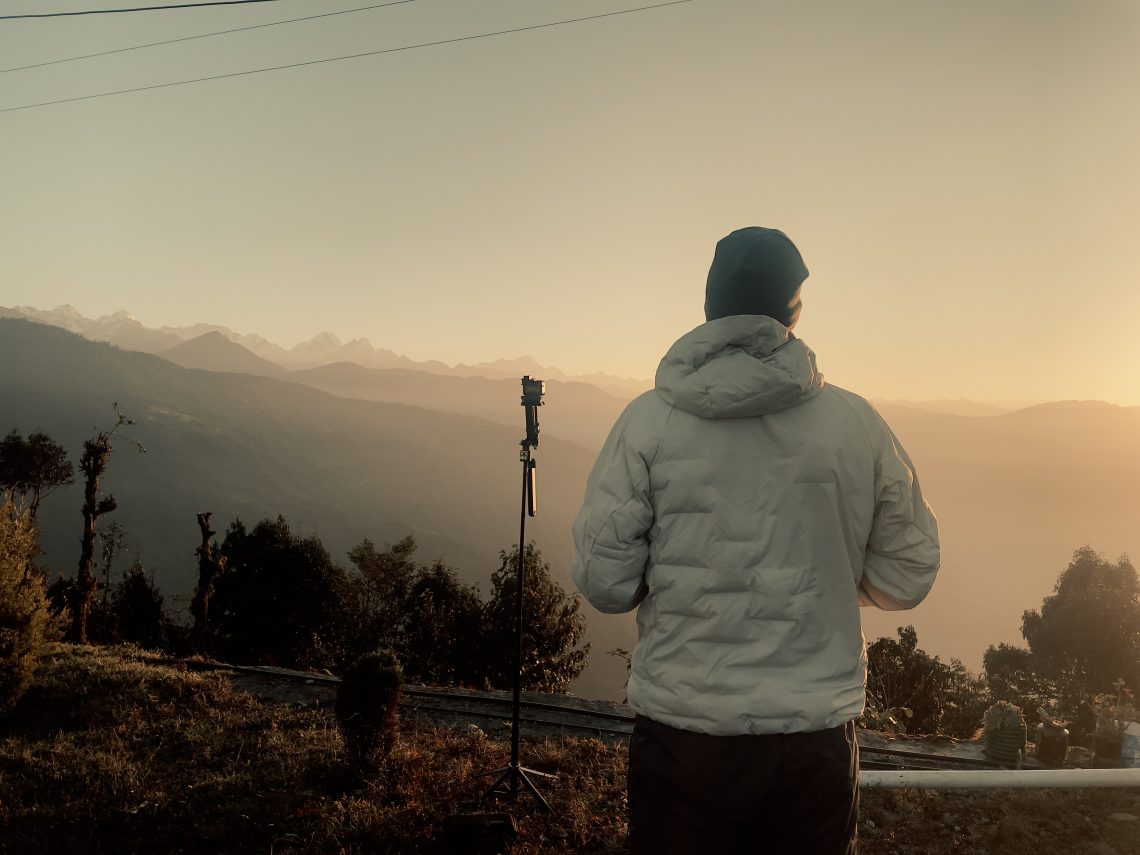
The following morning rewarded us with a beautiful sunrise. From Kutumsang, we could see the Langtang Range, Dorje Lakpa and parts of the Gaurishankar Range. After breakfast, we completed the necessary Langtang National Park permit formalities and continued towards Tharepati.
The trail was mostly uphill, passing through forested sections and small settlements. We planned to have lunch at Mangal Goth because food options are limited along some parts of the route. I prefer planning meals carefully in remote trekking areas rather than assuming that food will always be available when needed.
After lunch, we continued climbing towards Tharepati. Before reaching the settlement, we encountered a massive landslide that had affected the trail. We had to take the left-side route to get around the damaged section. Walking near landslide areas always demands extra attention. Loose ground and unstable slopes can turn an ordinary walking section into a risky one.
We finally reached Tharepati at around 5 pm. The evening light and surrounding mountain scenery made the effort worthwhile. From there, we could see the direction of Phedi and the Surya Kunda Pass, which was going to be one of the most challenging sections of our journey.
That evening, we sat around the fire, talked, read books and discussed the trail ahead. I knew the next few days would require more physical effort, especially as we gained altitude.
Fog, Endless Ascents and the Isolation of Phedi
Beyond Tharepati, the landscape gradually changed. We were walking higher, and the trail became more demanding. The body naturally needs more time to adjust to altitude, so I reminded everyone to maintain a steady pace, drink enough water and avoid unnecessary rushing.
The trail descended towards a riverside section before climbing again towards Phedi. These repeated descents and ascents were tiring. It often felt as though every downhill section was followed by another climb. We stopped for tea at Lower Ghopte and later had lunch at Upper Ghopte.
The weather was not particularly kind to us that day. Fog covered much of the landscape, and the mountain views disappeared. It can be disappointing to walk through such beautiful terrain without being able to see the surrounding mountains. However, this is part of trekking in the Himalayas. We cannot control the weather, and sometimes the best thing to do is accept the conditions and concentrate on the trail.
After several more uphill and downhill sections, we reached Phedi. It is a remote settlement with very limited accommodation facilities. There were only a couple of houses providing shelter to trekkers, and the isolation was quite noticeable.
The facilities were basic, and there were not many alternatives if we needed something extra. This is something trekkers should understand before choosing remote routes. Unlike popular trekking destinations, some sections of the Helambu–Gosainkunda trail require careful preparation, particularly regarding food, water, clothing and accommodation expectations.
We rested for the night, knowing that the most physically demanding climb was still ahead.
The Hardest Challenge: Climbing Towards Surya Kunda Pass
The climb from Phedi towards Surya Kunda Pass was undoubtedly the most challenging part of our trek.
We had to gain more than 1,000 metres in elevation over a relatively short distance of approximately two kilometres. At higher altitude, even a short walking distance can feel exhausting. Breathing becomes harder, the walking pace slows and the body needs frequent breaks.
We started early, knowing that we had a long climb ahead. Three of my companions were experiencing this kind of altitude for the first time, so I was particularly attentive to their condition. I have always believed that trekking is not a race. There is no reason to rush simply because a pass or destination is waiting ahead.
As we climbed higher, the physical demands became increasingly noticeable. It took us approximately five hours to reach Surya Kunda Pass.
However, the most concerning moment involved Sunita. She began experiencing a headache, blurred vision and chest discomfort. At high altitude, these symptoms must be taken seriously. They are not simply signs of ordinary tiredness. The correct response is to stop ascending, seek immediate medical assessment and consider an emergency descent or evacuation as appropriate. Medication or carbonated drinks should never be regarded as treatment for possible altitude illness.
This experience reminded me that even people who are physically active and familiar with the mountains can face unexpected health problems at altitude. Reaching a pass should never become more important than someone’s safety.
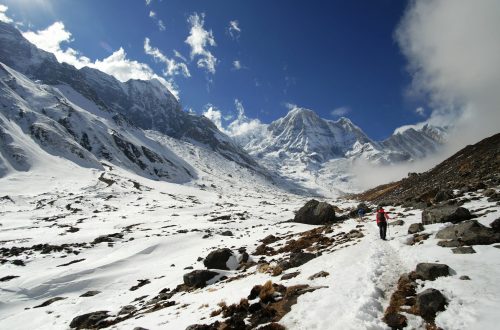
Once we reached the pass, we observed the surrounding landscape and took photographs. The views around Surya Kunda were remarkable, with the sacred lake, Surya Kunda Peak, surrounding mountain terrain and fresh snow creating a beautiful Himalayan setting.
The descent took us past several lakes before we finally reached Gosainkunda.
Gosainkunda: More Than Just a Mountain Lake
Reaching Gosainkunda after such a demanding climb was an emotional moment. The lake is surrounded by rugged mountain terrain, and its religious significance makes it very different from many other alpine lakes in Nepal.
Gosainkunda is deeply sacred to Hindus and is associated with Lord Shiva. Every year, pilgrims visit the lake, particularly during the Janai Purnima festival. For many people, reaching Gosainkunda is not simply a trekking achievement but also a spiritual journey.
After having lunch, we experienced the cold water of the lake and took a holy bath. The water was extremely cold, but the experience was memorable. Standing beside this sacred lake, surrounded by mountains after several days of walking, made me reflect on how nature and spirituality are so closely connected in Nepal.
We then had to make another practical decision: whether to stay overnight at around 4,400 metres or descend towards Lauribinayak. We chose to descend and managed to reach Lauribinayak while there was still daylight.
It was a relief to settle into accommodation after such a demanding day. My legs were tired, and the previous hours had reminded me once again that the mountains require both physical strength and careful judgement.
The Long Descent and a Final Taste of the Mountains
The following morning brought another beautiful sunrise. We could see Langtang Lirung, Ganesh Himal and Manaslu in the distance. After days of forests, fog, steep climbs and high-altitude terrain, the clear morning views felt like a wonderful farewell.
We started descending towards Dhunche. On the way, we stopped at the Cholangpati cheese factory. I find such places interesting because they show another dimension of mountain life. Local cheese production is connected with the region’s livelihoods and adds an interesting cultural and economic aspect to the trekking experience.
We tasted and purchased some cheese before continuing downhill. The descent was long, but psychologically it felt easier knowing that we were approaching the end of the journey.
After lunch at Deurali, we eventually reached Dhunche at around 4 pm. Our original plan was to stay overnight, but it was festival time, we still had sufficient daylight, and we decided to hire a jeep to return to Kathmandu.
The drive took several hours, and we finally arrived home at around 9 pm. After six days of walking, climbing, descending and dealing with unexpected situations, being back home felt wonderful. Dinner that evening was particularly satisfying. I was physically exhausted, but my mind was still travelling through the mountains.
What Made This Trek Particularly Challenging?
Looking back, I would not describe this trek as difficult because of one particular section alone. It was the combination of several challenges that made the overall journey demanding.
- Continuous uphill and downhill trails: The route between Chisapani, Kutumsang, Tharepati and Phedi involves repeated ascents and descents. These changes in elevation can be exhausting over several consecutive days.
- The steep climb to Surya Kunda Pass: The significant elevation gain over a short distance made this the most physically demanding section of our journey.
- Landslide-affected trail: The damaged section before Tharepati required extra caution and careful route selection.
- Limited accommodation and services: Remote settlements such as Phedi have basic facilities and very few accommodation options.
- Changing weather: Fog and poor visibility affected our experience and reminded us that mountain weather can change quickly.
- Altitude-related health concerns: The symptoms experienced by one of our group members were a serious reminder that health and safety must always come before reaching a destination.
Anyone considering this trek should prepare physically, carry suitable clothing and equipment, understand the risks of altitude and allow enough flexibility in the itinerary. A qualified guide and a sensible acclimatisation plan can make a significant difference, but no plan removes all mountain risks.
What I Learned from This Journey
I have spent many years walking in the mountains of Nepal. I have guided trekkers, crossed high passes, explored remote villages and witnessed some of the most beautiful landscapes in the world. Yet, every journey teaches me something new.
This six-day trek reminded me that experience does not make anyone immune to difficulties. A missing porter, a steep trail, a landslide, unexpected fog, altitude-related symptoms and changing plans can all become part of the same journey.
I also realised once again how important patience is in the mountains. There is no need to rush. A successful trek is not measured by how quickly we reach a destination or how many photographs we take. It is about understanding the surroundings, respecting local communities, looking after the people walking with us and making responsible decisions.
The sunrise at Kutumsang, the fire at Tharepati, the foggy trail to Phedi, the demanding climb to Surya Kunda Pass, the sacred waters of Gosainkunda and the final drive home from Dhunche are all part of one unforgettable memory.
I returned with tired legs, beautiful photographs and a renewed respect for the mountains.
And perhaps that is why I continue to walk.
The mountains are never just places we visit. They are places that challenge us, humble us and stay with us long after we return home.
— Rajan Pandit
Trekking guide and Tour Operator, Nepal
October, 2026

You May Also Like